DNA Methylation Profiling for Translational Discovery

Epigenome Technologies provides end-to-end DNA methylation services, from gold-standard WGBS to bisulfite-free TAPS+/5-base sequencing. We align method selection to your experimental design deliver single-base resolution methylation maps ready for downstream analysis. We also combine chromatin profiling with DNA methylation to provide high-content epigenetic readouts.

Gold Standard

WGBS

Genome-wide single-base 5mC mapping for reference-quality methylation landscapes.

5mC -> T

TAPS

Bisulfite-free chemistry limits DNA damage retaining full fragment size distribution.

Chromatin + 5mC

CUT&TAPS

Multi-spectrum, simultaneous profiling of chromatin state and DNA methylation. Low-input and lower sequencing requirements than WGBS.

Choose the right methylation profiling method

Service Cat. No Input Modification Detected Best For Inquiry
WGBS EGT-WG-401 50+ ng DNA 5mC (CpG, CHG, CHH) Genome-wide 5mC maps, reference datasets, aging and cancer cohorts Request Quote
TAPS EGT-TP-502 1ng DNA 5mC (CpG, CHG, CHH) cfDNA, FFPE and scarce samples, full fragments for long reads Request Quote
CUT&TAPS EGT-CTAP-603 50,000 nuclei or fewer 5mC at antibody-defined loci Low-cost, high-coverage joint histone/TF profiling with DNA methylation Request Quote
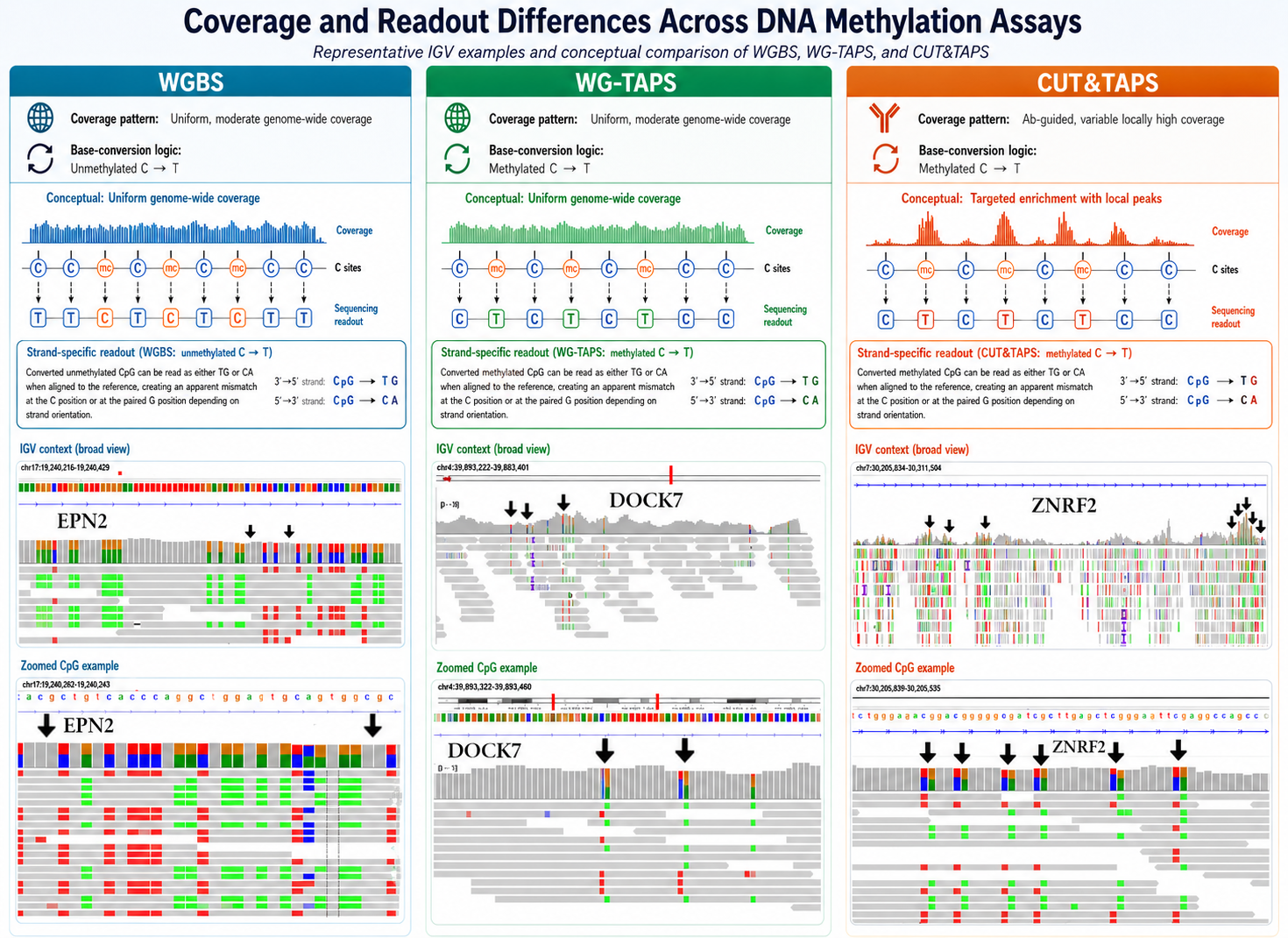
Comparison of CpG coverage and 5mC resolution across WGBS, TAPS, and CUT&TAPS
WGBS and TAPS provide genome-wide single-base resolution; CUT&TAPS focuses depth at antibody-enriched loci, reducing sequencing requirements.

Single-base methylation profiling across sample types and scales

WGBS, TAPS, and CUT&TAPS map DNA methylation at single-base resolution across distinct biological scales. Epigenome Technologies can help match the technology to experimental questions and sample quantities, delivering best-in-class discovery-oriented methylation datasets.
Common applications

  • Cancer methylation landscape profiling and biomarker discovery
  • Aging clock validation and epigenetic age acceleration studies
  • Cell-free DNA / circulating tumor DNA methylation studies
  • FFPE and archival specimen rescue for retrospective cohorts
  • Chromatin-state-linked methylation at enhancers and promoters
  • Chromatin/Methylation crosstalk and high-content epigenetics

Included with every engagement

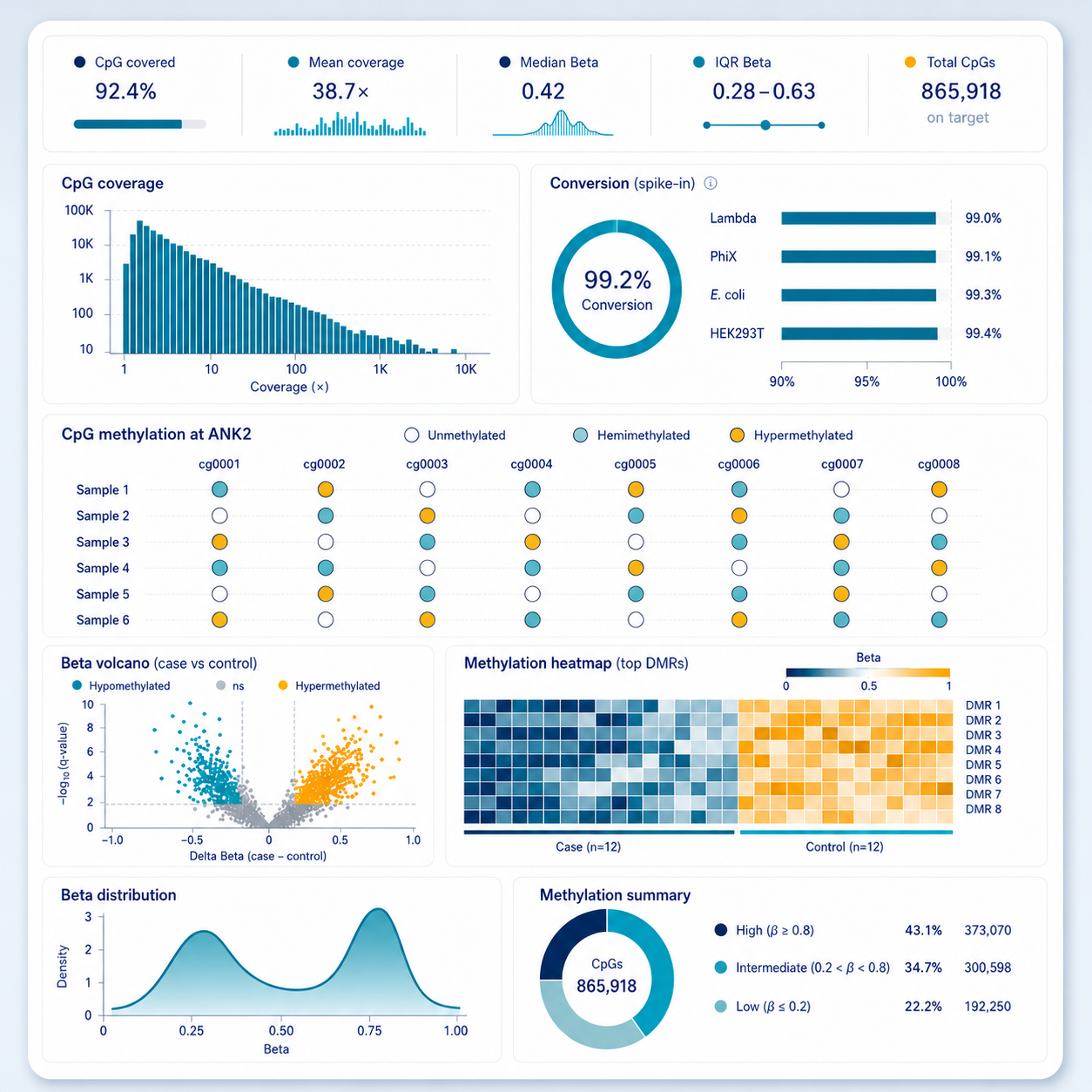
Example WGBS quality control panels showing CpG coverage distribution, library complexity curve, and bisulfite conversion efficiency via spike-in
Representative QC output: coverage distribution, library complexity, and spike-in conversion efficiency shown for a typical WGBS run.
  • Experimental design and assay alignment with sample availability and project goals
  • DNA controls for %conversion normalization
  • Quality control reviews at specified checkpoints
  • End-to-end sequencing and data processing
  • Optional integration with RNA-seq, ATAC-seq, or chromatin profiling datasets

WGBS: Single-Base Genome-Wide Methylation Mapping

Whole genome bisulfite sequencing provides single-base resolution methylation calls across every CpG in the genome, establishing the reference standard for methylation landscape studies. Our WGBS service covers library prep, bisulfite conversion, sequencing, and Bismark-based methylation calling, delivering CpG-resolution bedGraph and CpG_report files ready for downstream DMR analysis.
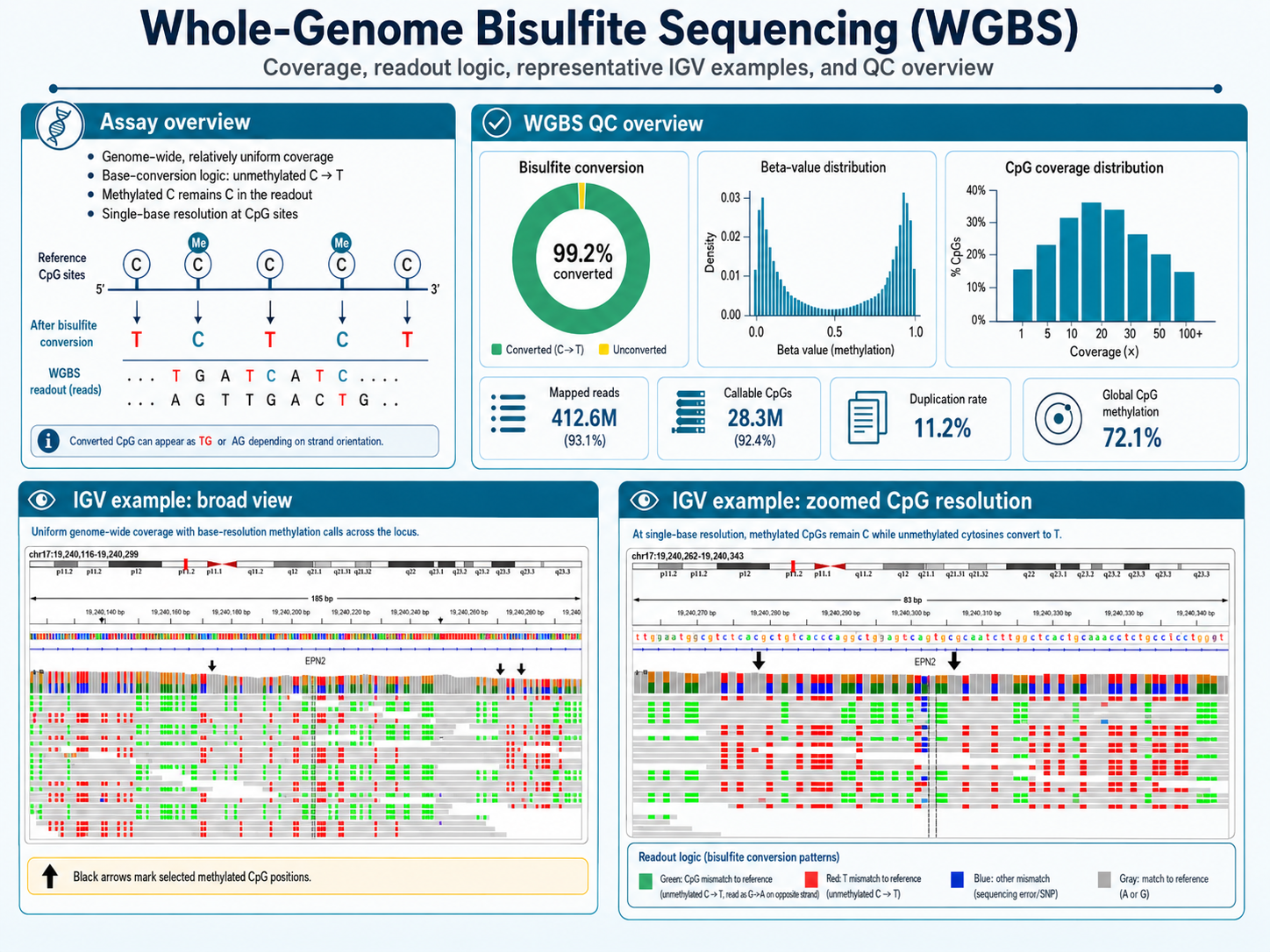
Bisulfite conversion chemistry, WGBS coverage QC metrics, and IGV browser tracks at kilobase and single-base resolution
Bisulfite converts unmethylated cytosines to uracil (read as T), while methylated CpG and CH sites are retained, enabling genome-wide methylation calling at single-base resolution.

Best for

  • High-input samples (≥100 ng genomic DNA)
  • Reference-quality genome-wide 5mC maps
  • Aging clock validation and cancer methylation landscapes
  • Allele-specific methylation and imprinting studies
  • Benchmark comparisons across cohorts and platforms

Genome-wide CpG Methylation

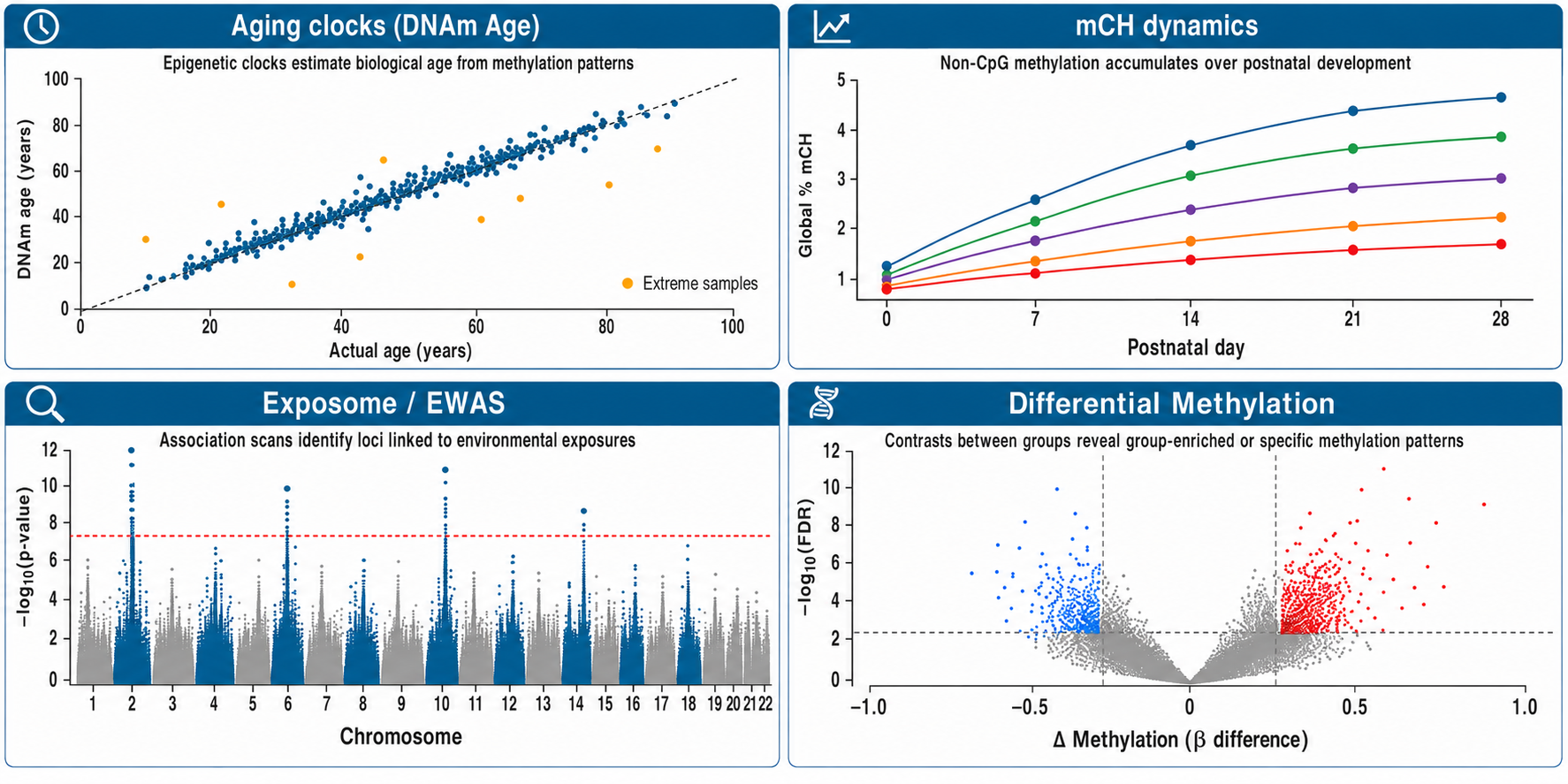
WGBS applications: aging clock validation, EWAS, developmental mCH quantification, and differential methylation analysis
WGBS is the reference standard for aging clocks, EWAS, developmental mCH quantification, and differential methylation studies.

QC metrics

  • Bisulfite conversion efficiency ≥ 99.5%
  • Complexity sufficient for ≥ 100× median across target regions
  • Replicate CpG correlation > 0.97
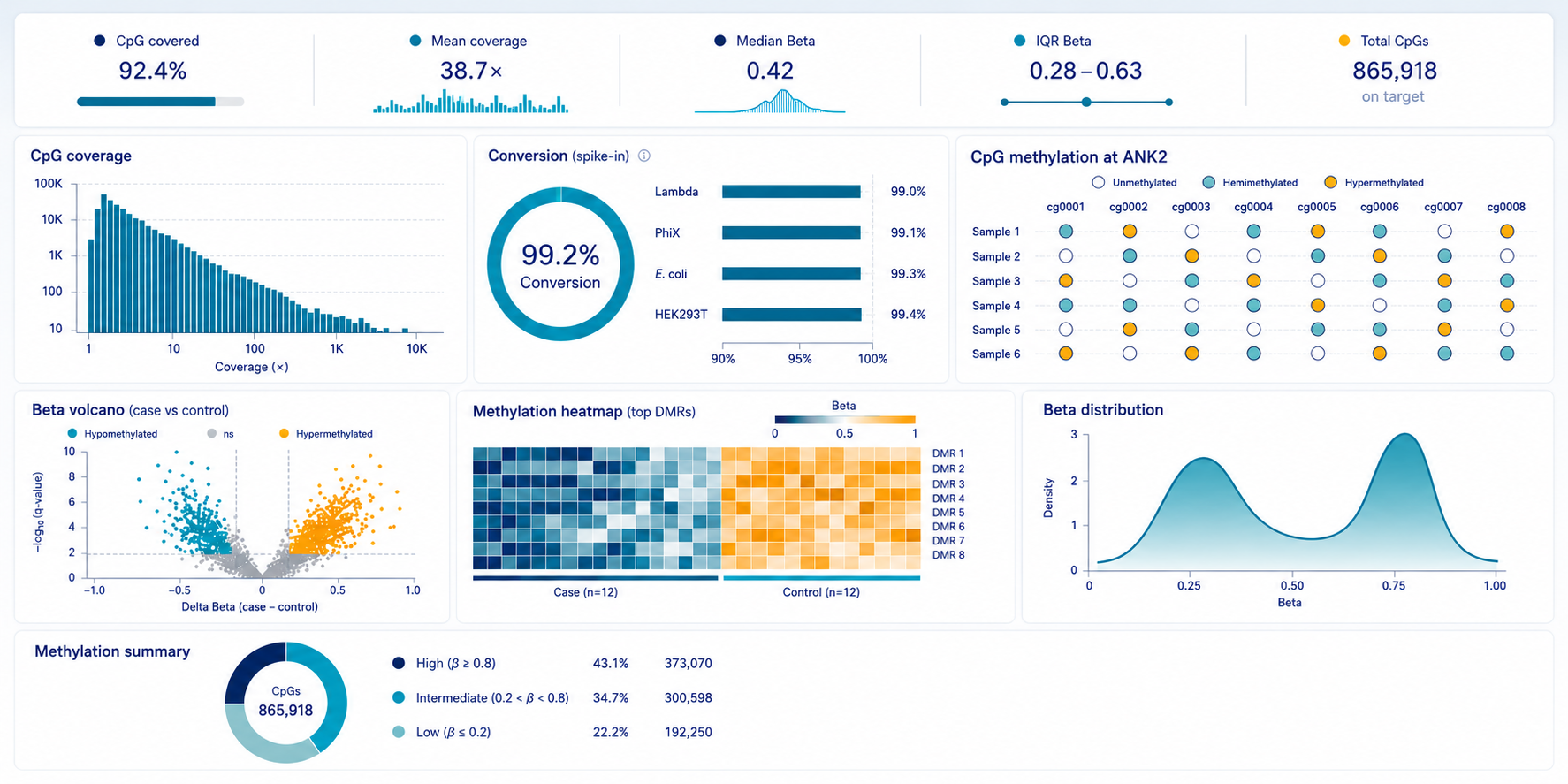
WGBS QC panels: CpG coverage distribution and mean, beta distribution with IQR, total CpG count, spike-in conversion efficiency, methylation at a known reference gene, beta volcano plot, top DMR heatmap, and CpG methylation summary by level
Standard WGBS QC output: coverage and complexity metrics, spike-in conversion efficiency, differential methylation summary, and CpG methylation level distribution.

Workflow

  1. Plan

    Study design review covering coverage targets, cohort batching, spike-in strategy, and downstream analysis requirements.

  2. Fragment & convert

    DNA shearing to target fragment size, bisulfite treatment, and desulfonation with integrated conversion efficiency checkpoint.

  3. Library construction

    Adapter ligation, PCR amplification, and size selection with conversion QC gate prior to sequencing approval.

  4. Sequence & call

    Paired-end sequencing followed by Bismark alignment and CpG-resolution methylation calling across all three cytosine contexts.

Deliverables

  • Library QC metrics including conversion efficiency and fragment distribution
  • FASTQ files and Bismark-aligned BAM files
  • CpG-resolution methylation calls (bedGraph and CpG_report formats)
  • DMR analysis with annotated genomic context
  • Detailed QC report with coverage distributions and duplication metrics

Advantages

  • Single-base resolution across the entire CpG methylome
  • Detects CpG, CHG, and CHH methylation contexts
  • Gold-standard benchmark for inter-lab and multi-cohort comparisons
  • Compatible with established aging clock and DMR pipelines
  • Comprehensive coverage enables allele-specific methylation calling

TAPS: Bisulfite-Free Resolution of 5mC

Confident application of Watchmaker TAPS+ or Illumina 5-base to convert 5mC into readable bases without bisulfite treatment, preserving DNA integrity and enabling lower-input workflows. TAPS+ and 5-base deamination kits are less damaging to DNA, and thus better able to retain large fragments for long-range methylation haplotyping.
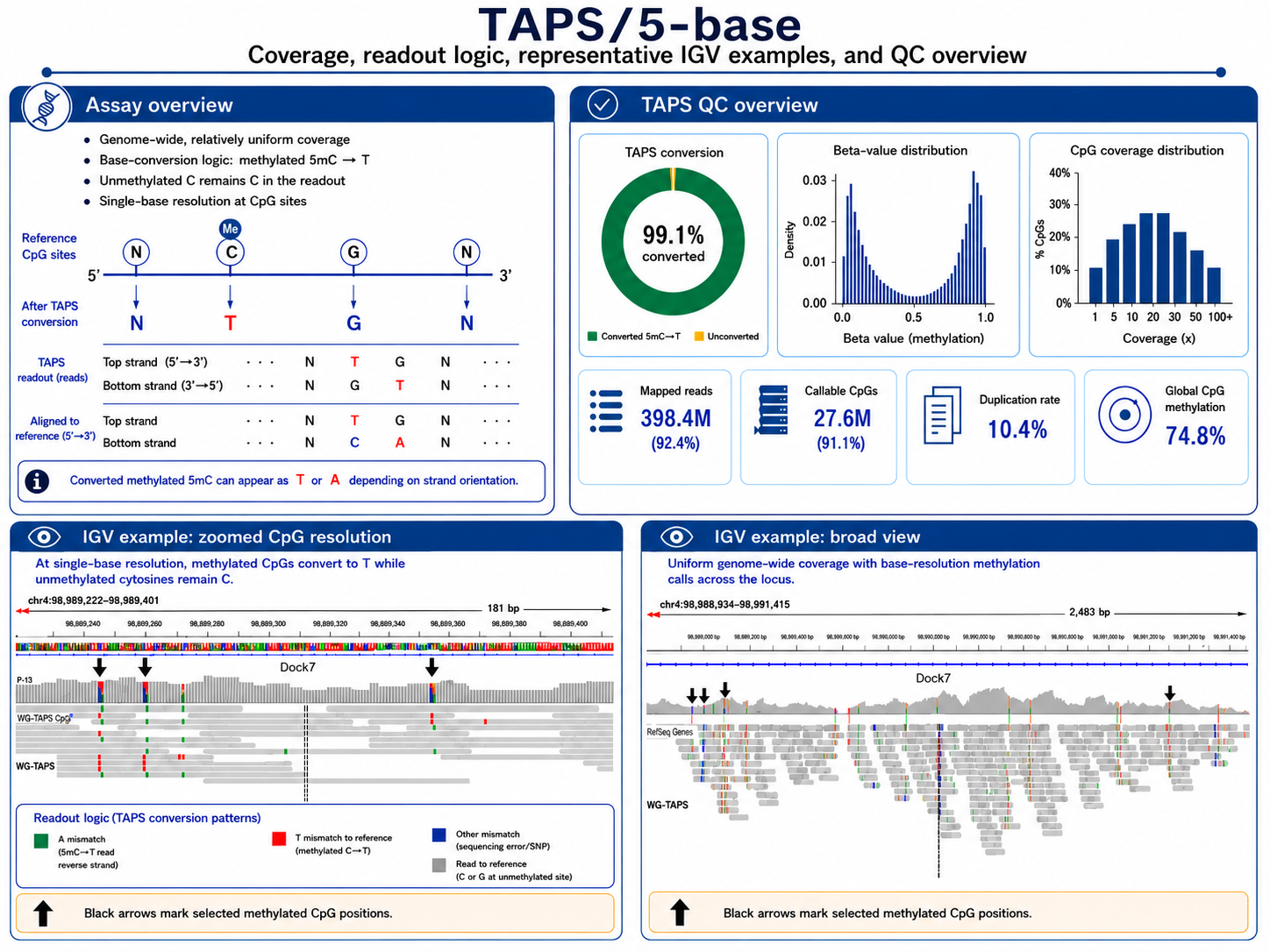
TAPS chemistry converting 5mC to a readable base without bisulfite treatment, with coverage QC metrics and IGV methylation tracks at single-base resolution
TAPS and 5-base convert 5mC to a readable base without bisulfite-induced cytosine deamination, preserving uniform coverage and reducing depurination-related alignment artifacts.

Best for

  • FFPE and archival specimens where bisulfite degradation limits data quality
  • Low-input DNA (1 ng) with minimal fragmentation tolerance
  • Fragmentomics data where fragment size is valuable
  • Long-range methylation haplotyping

Bisulfite-Free Chemistry

TAPS applications: aging clock validation, EWAS, developmental mCH quantification, and differential methylation analysis
TAPS applications include aging clocks, EWAS, developmental mCH quantification, and differential methylation studies.

QC metrics

  • Conversion efficiency ≥ 98%
  • CpG coverage ≥ 10× median at 1ng DNA
  • Replicate CpG correlation (Pearson r) > 0.97
TAPS QC panels: CpG coverage distribution and mean, beta distribution with IQR, total CpG count, spike-in conversion efficiency, methylation at a known reference gene, beta volcano plot, top DMR heatmap, and CpG methylation summary by level
Standard TAPS QC output: coverage and chemistry efficiency metrics, spike-in conversion efficiency, differential methylation summary, and CpG methylation level distribution.

Workflow

  1. Plan

    Sample QC review, coverage targets, spike-in strategy, and confirmation of 5hmC enrichment regions of interest.

  2. Methylation conversion

    Bisulfite-free chemistry via TAPS+ or 5-base deamination preserves DNA integrity and reduces depurination artifacts.

  3. Library construction

    Adapter ligation, amplification, and size selection with chemistry efficiency QC gate prior to sequencing approval.

  4. Sequence & call

    Paired-end sequencing, TAPS-aware alignment, and generation of separate 5mC and 5hmC methylation call files at single-base resolution.

Deliverables

  • Library QC metrics with efficiency reports
  • FASTQ files and TAPS-aligned BAM files
  • Methylation quantification at CpG and CHH
  • QC report comparing 5mC and 5hmC profiles across samples

Advantages

  • Bisulfite-free chemistry reduces DNA degradation and improves FFPE data quality
  • Lower DNA input than WGBS (down to 1 ng)
  • Cleaner base calls with reduced C→T noise from depurination
  • Compatible with long-read sequencing for phased methylation analysis

CUT&TAPS: Joint Chromatin/Methylation Profiling

CUT&TAPS combines CUT&Tag-style antibody-guided chromatin cleavage with bisulfite-free chemistry to map DNA methylation specifically at loci defined by a protein of interest — such as a histone modification, transcription factor, or methylation proteins themselves such as MECP2 or DNMT3. The approach delivers targeted methylation data from as few as 50,000 nuclei, without the sequencing cost of whole-genome coverage.
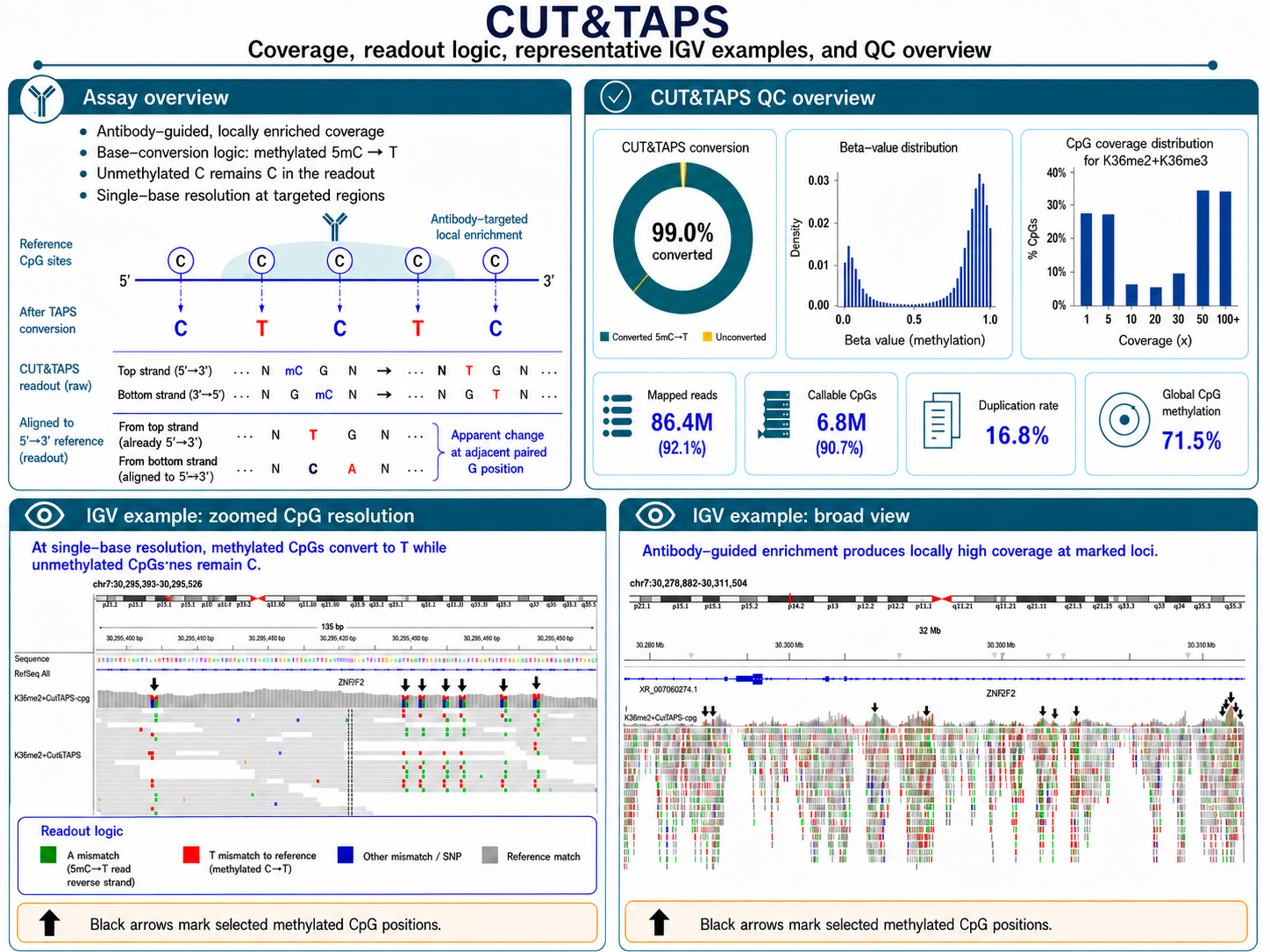
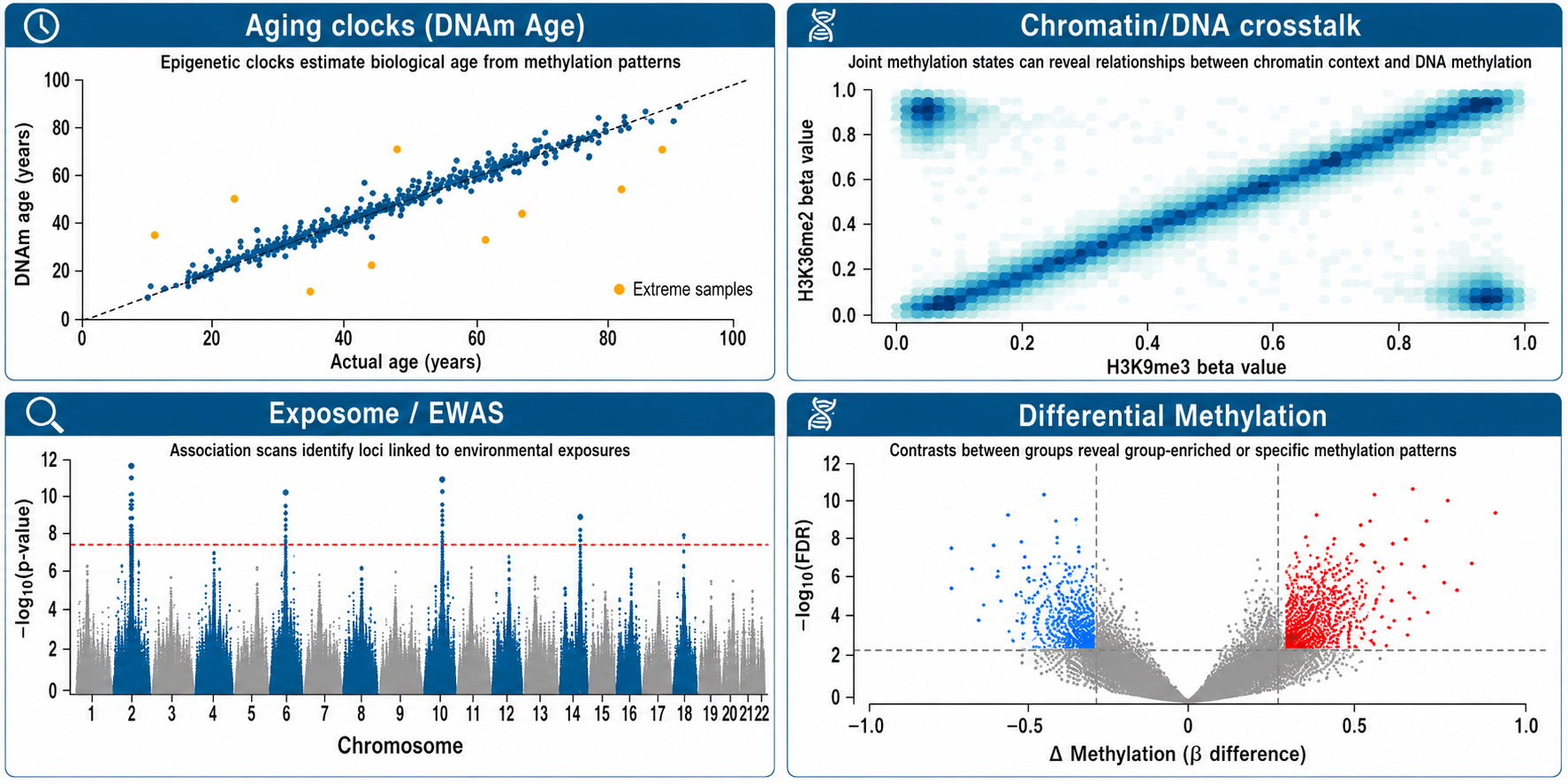
CUT&TAPS workflow: antibody-guided chromatin cleavage paired with TAPS methylation chemistry, with QC metrics and IGV methylation tracks at enriched loci
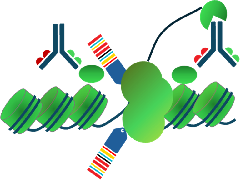
pA-MNase cleaves at antibody-targeted chromatin sites, releasing fragments that undergo TAPS methylation conversion prior to sequencing.

Best for

  • Ultra-low-input samples (50,000 cells)
  • Available in single-cell resolution
  • Methylation profiling adjacent to specific histone marks or TF binding sites
  • Methylation quantification at actively-methylated CpGs
  • Chromatin-state-linked methylation in disease and development
  • Studies requiring simultaneous epigenetic mark and methylation readout
  • Single-cell methylation studies

Chromatin–Methylation Crosstalk

CUT&TAPS applications: targeted methylation profiling at histone-marked or TF-bound loci, chromatin-state-specific methylation analysis, and single-cell methylation studies
CUT&TAPS can be used as a low-cost approach to typical 5mC analyses, but enables novel interrogations as well, such as examining chromatin-state-specific DNA methylation patterns.

QC metrics

  • Antibody enrichment confirmed by FRiP at known target loci ≥ 0.50
  • TAPS chemistry efficiency verified by spike-in controls
  • On-target CpG coverage ≥ 30× at enriched regions
  • Replicate CpG correlation at enriched loci > 0.96
CUT&TAPS QC panels: on-target CpG coverage distribution and mean, beta distribution with IQR, total CpG count at enriched loci, spike-in conversion efficiency, methylation at a known reference gene, beta volcano plot, top DMR heatmap, and CpG methylation summary by level
Standard CUT&TAPS QC output: on-target coverage and antibody enrichment metrics, spike-in conversion efficiency, differential methylation summary, and CpG methylation level distribution at enriched loci.

Workflow

  1. Plan

    Antibody validation, target locus strategy, cell input assessment, and spike-in design with your project scientist.

  2. Antibody binding & cleavage

    Cell permeabilisation, antibody incubation, protein A-MNase tethering, and on-bead cleavage at antibody-defined target loci.

  3. Methylation conversion

    TAPS+ conversion or 5-base deamination, depending on application, convert methylation to readnable bases

  4. Library & analysis

    Adapter ligation, sequencing, TAPS-aware alignment, and methylation calling within antibody-enriched windows.

Deliverables

  • Library QC metrics with enrichment and TAPS chemistry efficiency reports
  • FASTQ files and enrichment-aware aligned BAM files
  • Methylation calls at CpG resolution within antibody-enriched regions
  • Peak calls and coverage tracks showing antibody enrichment
  • Integrated report linking chromatin mark occupancy to local methylation state

Advantages

  • Combines CUT&Tag antibody precision with bisulfite-free methylation readout
  • Ultra-low-input — suitable for primary cells and clinical specimens
  • Single-cell compatible with Chromium or other platforms
  • Focused sequencing depth: cost-efficient for targeted hypotheses
  • Links histone modification state directly to DNA methylation at single-locus resolution
  • No whole-genome coverage required — reduces compute and sequencing costs

Partner with our scientists

Share your sample type, modification targets, and cohort size. We will return a scoped methylation profiling brief outlining recommended method selection (WGBS, TAPS+, or CUT&TAPS), QC checkpoints, and downstream reporting.

  • Sample requirements: Method-specific inputs from 50,000 nuclei (CUT&TAPS) to 1ng DNA (TAPS/5base), to low-cost high inputs (WGBS).
  • Storage guidance: Fresh, cryopreserved, or FFPE submissions accepted with documented handling.
  • Data options: Raw, processed, and analyzed outputs available individually or bundled.
  • Support: Project scientists provide experimental planning and guidance, data reviews, and troubleshooting.