Cell-Resolved Histone and TF Profiling at Production Scale

Epigenome Technologies delivers single-cell CUT&Tag programs that profile histone modifications, transcription factors, and chromatin-associated proteins in heterogeneous populations without flow sorting. We qualify antibodies, optimize nuclei handling, and return interpretable cell-by-peak matrices that integrate directly with your scRNA-seq pipelines.

Targeted Chromatin Profiling

Precise protein–DNA mapping

Single-cell CUT&Tag sensitively profiles histone modifications and chromatin-associated proteins with low background.

Antibody-Driven Assay Design

Optimized for each target

Antibody qualification and nuclei handling are tailored to the protein of interest and sample type.

Built for Cellular Resolution

Cell-state–specific insight
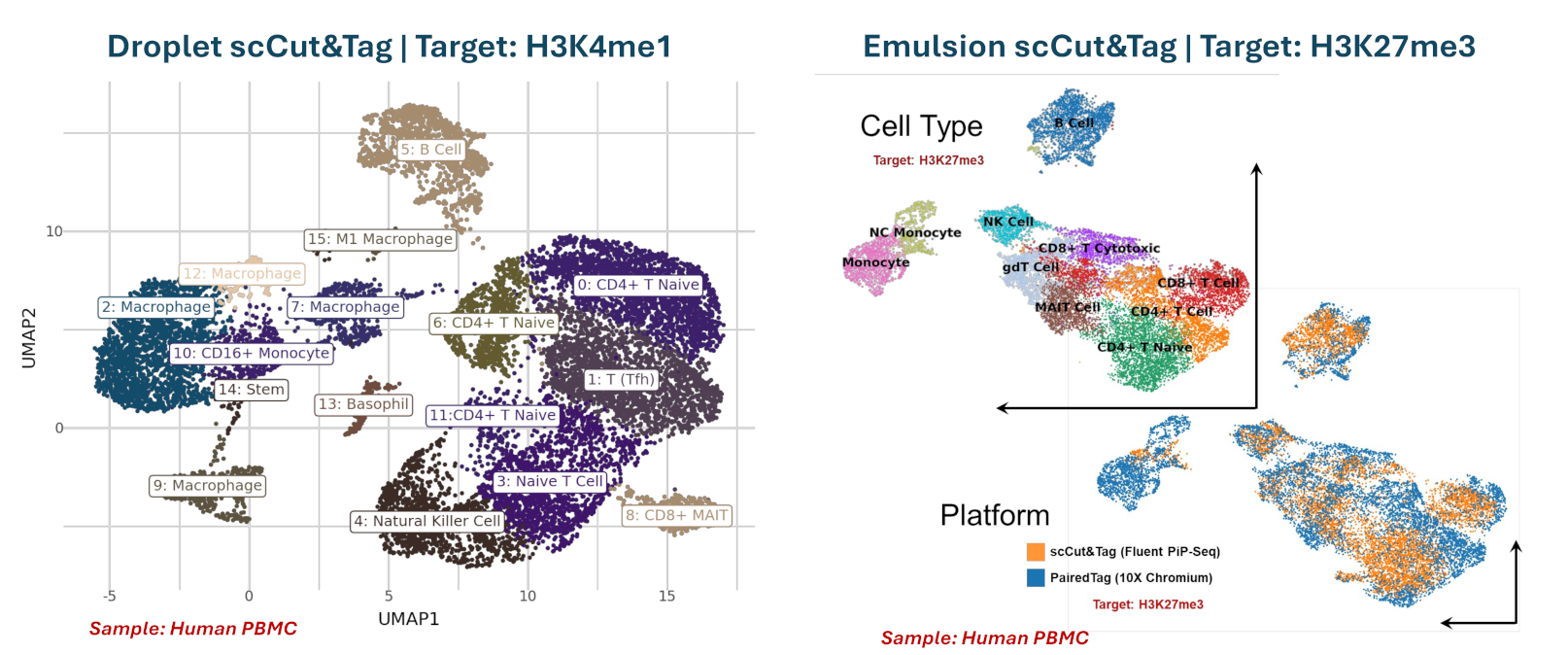
High-resolution single-cell data reveal regulatory differences across heterogeneous populations.

Two UMAP plots, one for H3K4me1, and one for H3K27me3, scCUT&Tag
Bring your CUT&Tag experiment to single-cell resolution.

scCUT&Tag for cell-type epigenetic profiling

Single-cell CUT&Tag uses antibody-targeted tagmentation to map where histone modifications, transcription factors, or chromatin-associated proteins bind DNA across individual cells. The approach delivers fragment-level precision for regulatory element annotation, heterogeneity discovery, and rare-cell epigenetic characterization without flow cytometry pre-enrichment.

Where teams use the program

  • Oncology and immunology studies requiring cell-type enhancer or silencing profiles.
  • Developmental cohorts tracking dynamic histone mark transitions.
  • Rare-cell epigenetic characterization in mixed tissues without FACS.
  • Perturbation screens validating chromatin-state responses to CRISPR or compound treatments.
  • Biomarker discovery linking epigenetic signatures to treatment response or resistance.

Collaboration model

  • Joint design sessions align target antibodies, cell counts, sequencing depth, and optional RNA integration.
  • Antibody validation runs confirm signal quality before committing full cohorts.
  • Project scientists remain embedded through QC reviews, data interpretation, and reporting.

Included interpretation

  • Cell-type clustering and epigenetic signature annotation.
  • Differential peak analysis and motif enrichment summaries.
  • Regulatory element linkage to scRNA-seq or bulk expression datasets.
  • Actionable slide-ready visualizations delivered alongside raw outputs.

Aligning platform to experimental design

Platform Cat. No. Best For Typical Cell Count
Droplet scCUT&Tag SCTDS201 10x Genomics-compatible workflows; integrated multiome readouts 5,000–10,000 cells/sample
Emulsion scCUT&Tag SCTDE201 High-throughput cohorts; flexible cell input and antibody panels 10,000–50,000 cells/sample

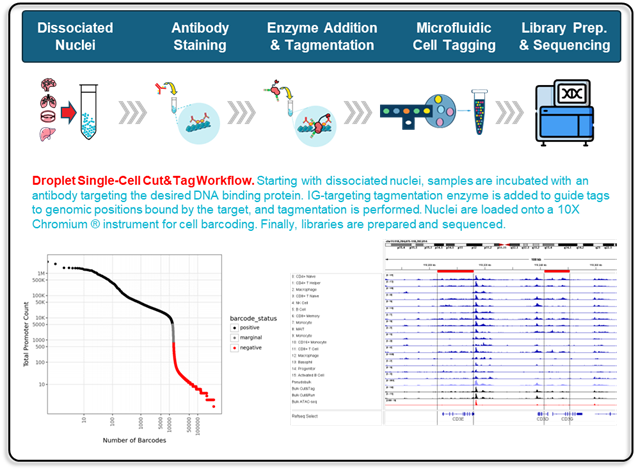
Droplet scCUT&Tag

IGV browser tracks of cell-level pseudobulk from Droplet scCUT&Tag
Get clarity on which cells drive observed changes in chromatin state.

Integrates with 10x Genomics platforms for straightforward scRNA-seq + epigenetic multiome workflows. Ideal when combining transcript and histone modification profiles in the same cells.

  • 10x-compatible barcoding for direct integration with scRNA-seq
  • Streamlined library construction with validated antibody panels
  • Recommended for cohorts requiring 5,000–10,000 cells per sample

Emulsion scCUT&Tag

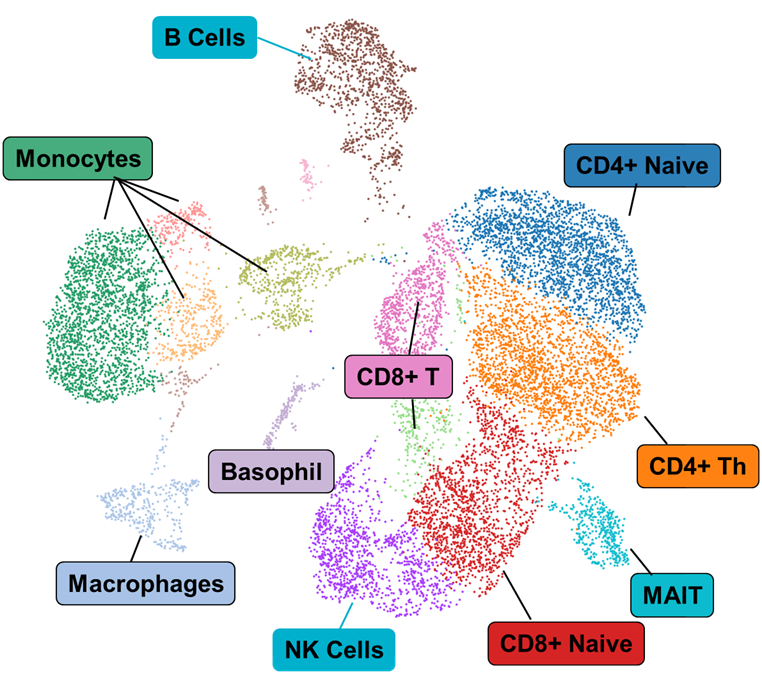
UMAP of H3K4me1 scCUT&Tag (Emulsion-based)
Deposition of active chromatin marks enables identification of major cell types and their epigenetic states.

High-throughput emulsion chemistry for large-scale profiling or when 10x compatibility is not required. Flexible antibody panels and cell counts support discovery-phase heterogeneity studies.

  • Scale to 2,000–50,000 cells per sample
  • Custom antibody panels for non-standard histone marks or TFs
  • Optimized for cohorts emphasizing epigenetic diversity over RNA linkage

Selection guidance

  • Choose Droplet scCUT&Tag when integrating with existing 10x scRNA-seq workflows or requiring RNA+epigenetic co-profiling.
  • Choose Emulsion scCUT&Tag for pilot or large-scale profiling, or when RNA linkage is not the primary objective.

Transparent workflow and checkpoints

  1. Plan & validate antibodies

    We confirm target antibodies, cell counts, and nuclei handling protocols; optional antibody validation runs ensure signal quality before full cohort commitment.

  2. Prepare & construct

    Nuclei isolation, antibody staining, and droplet or emulsion encapsulation with QC on viability, tagmentation efficiency, and fragment distribution.

  3. Sequence

    Paired-end runs on NovaSeq or NextSeq platforms with depth monitoring against internal signal-to-noise benchmarks.

  4. Interpret

    Automated cell calling, peak annotation, and cell-type clustering with data packages aligned to your preferred analysis environment.
Operational cadence

  • Day 3 antibody validation QC review (if requested) with your project scientist.
  • Day 7 nuclei prep and library construction status with preliminary fragment profiles.
  • Day 12 library acceptance with complexity and tagmentation efficiency reports.
  • Day 24 FASTQ and cell-by-peak matrices delivered; interpretive briefing.
Flowchart illustrating scCUT&Tag workflow from sample intake through antibody validation, nuclei prep, encapsulation, library construction, sequencing, and data delivery
Milestones from antibody qualification through analysis-ready reporting.

Top-Tier Quality Metrics

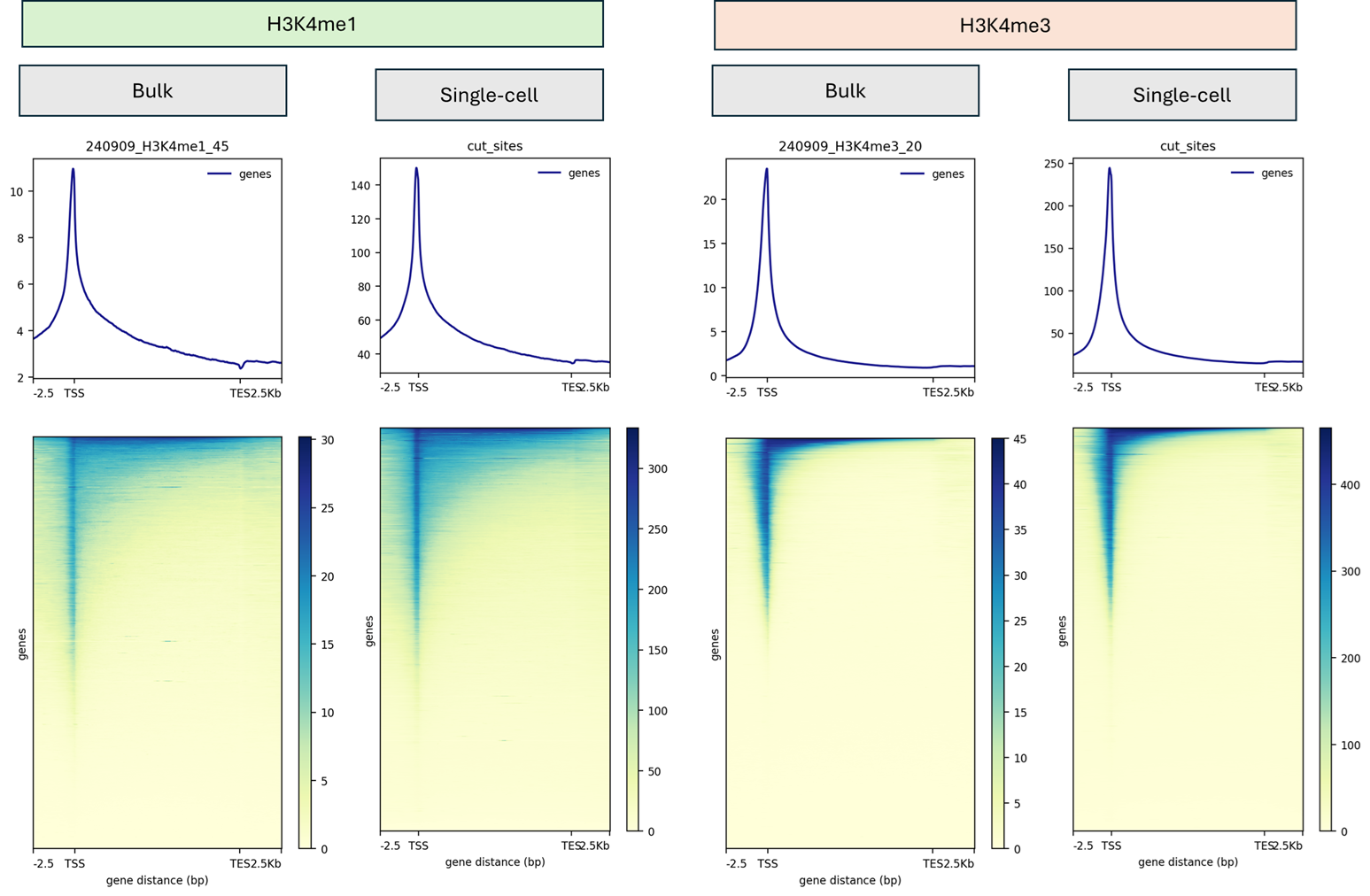
H3K4me1/H3K4me3 tsse for bulk and single-cell pseudobulk
High-complexity single-cell libraries with no reduction in quality over bulk.
  • TSS enrichment distributions with cohort medians and antibody-specific benchmarks.
  • Fragment size and nucleosome phasing profiles reviewed prior to sequencing approval.
  • Cell-barcode complexity and background noise assessments for every sample.
  • Signal-to-noise overlays compared to internal gold standards and published scCUT&Tag references.

Delivery package

UMAP of human PBMC from H3K4me1 scCUT&Tag
Explore the epigenome at single-cell resolution.
  • Sequencing-ready libraries with concentration, fragment distribution, and complexity documentation.
  • FASTQ, cell-by-peak matrices, and metadata formatted for Seurat, Scanpy, or custom pipelines.
  • Optional interpretive report summarizing cell-type clustering, differential peaks, and regulatory element annotations.

Partner with our scientists

Share your target antibodies, cohort size, and required timelines. We will return a scoped scCUT&Tag brief outlining platform selection, antibody validation strategy, QC checkpoints, and downstream reporting.

  • Sample requirements: 100K–200K nuclei preferred depending on platform; low-input contingencies available.
  • Storage guidance: Fresh or cryopreserved nuclei accepted with documented handling.
  • Data options: Raw, processed, and interpretive outputs available individually or bundled.
  • Support: Project scientists provide experimental planning and guidance, data reviews, and troubleshooting.